About TN
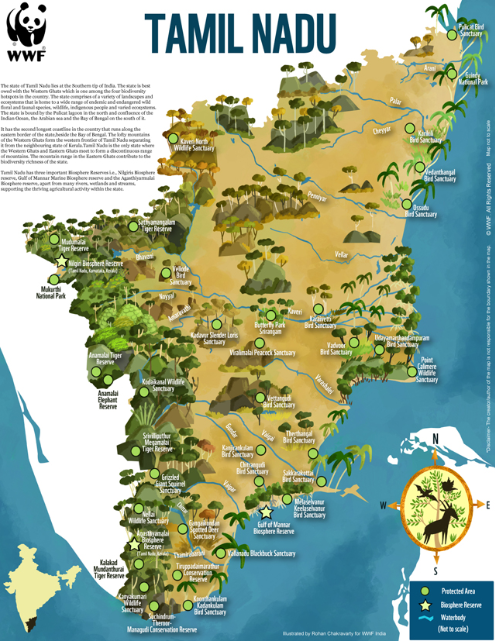
Tamil Nadu stands out as one of India’s most environmentally diverse regions, with forests spread across roughly one-fifth of the state’s total land area. Its natural landscapes range from the mountain forests of the Western and Eastern Ghats to coastal mangroves, wetlands, grasslands, and dry deciduous zones. Together, these ecosystems sustain a wide variety of plant and animal life and include internationally recognized ecological regions such as the Western Ghats biodiversity hotspot and important biosphere reserves like the Nilgiris and the Gulf of Mannar. Beyond biodiversity, these forests contribute significantly to climate balance, water conservation, and the well-being of communities that depend on them. A conservation-focused model that blends responsible tourism, ecosystem protection, and community involvement helps ensure that nature-based experiences actively support the long-term health and resilience of Tamil Nadu’s environment.